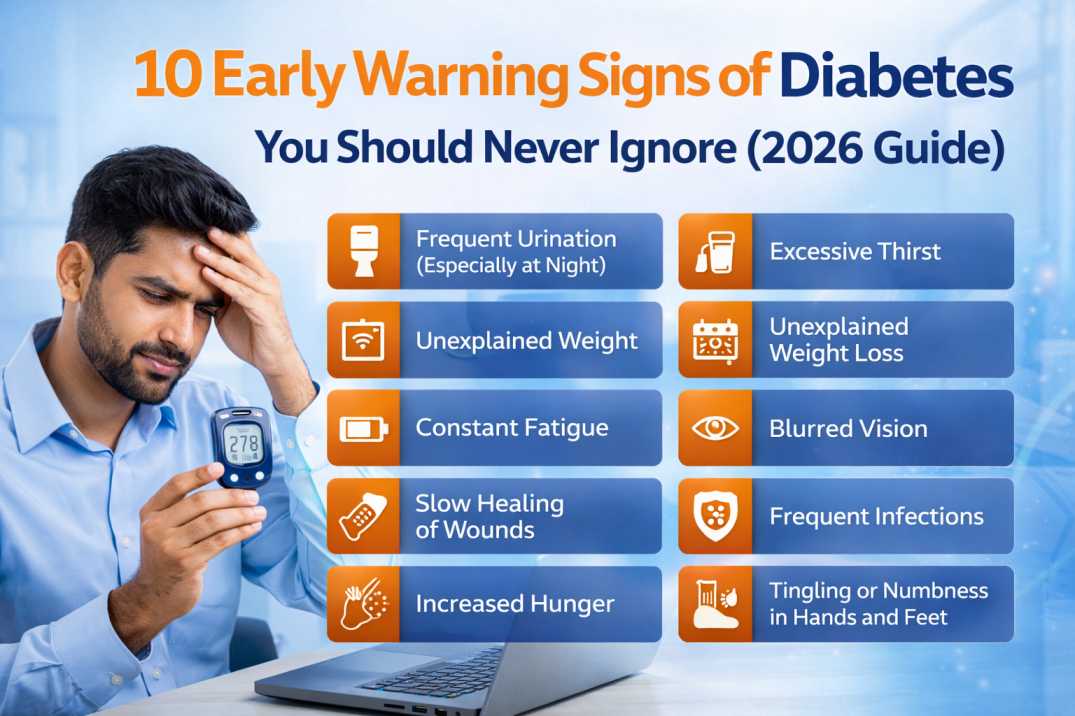
10 Early Warning Signs of Diabetes You Should Never Ignore (2026 Guide). Diabetes is no longer a rare condition. In 2026, it has become one of the most common lifestyle-related health problems across the world — including India. The scary part? Many people live with diabetes for years without even realizing it.
The early warning signs are often mild, confusing, or easy to ignore. You might think you’re just tired from work, dehydrated because of the weather, or gaining weight due to stress. But sometimes, your body is quietly trying to tell you something serious.
In this detailed guide, we’ll talk about 10 early warning signs of diabetes you should never ignore, explained in simple and human language — no complicated medical terms. Just clear understanding so you can protect your health.
First, What Is Diabetes?
10 Early Warning Signs of Diabetes You Should Never Ignore (2026 Guide), Diabetes is a condition where your blood sugar (glucose) levels become too high.
The most common types are:
-
Type 1 Diabetes – Usually develops early in life and requires insulin.
-
Type 2 Diabetes – More common, often linked to lifestyle, weight, and family history.
-
Prediabetes – Blood sugar is higher than normal but not high enough to be diabetes yet.
Type 2 diabetes is the most common form, especially in adults above 30 — but now even younger people are being diagnosed.
1. Frequent Urination (Especially at Night)
One of the earliest and most common signs of diabetes is needing to urinate more often than usual.
When blood sugar levels rise, your kidneys work harder to remove excess sugar from the body. This extra sugar is flushed out through urine, which makes you visit the bathroom more often — sometimes even waking up multiple times at night.
If you notice:
-
Sudden increase in bathroom trips
-
Waking up 2–3 times at night to urinate
-
Larger amount of urine
Don’t ignore it.
2. Excessive Thirst
If you’re constantly feeling thirsty — even after drinking water — it could be a red flag.
Because your body is losing more fluids through frequent urination, it tries to compensate by making you feel thirsty again and again.
This cycle continues:
High sugar → More urination → Dehydration → More thirst
If you feel:
-
Dry mouth
-
Constant need for water
-
Thirst that doesn’t go away
It’s worth checking your blood sugar.
3. Unexplained Weight Loss
Losing weight without trying might sound like good news — but sometimes it’s not.
In diabetes, your body cannot use glucose properly for energy. So instead, it starts breaking down fat and muscle for fuel. This can cause sudden, unexplained weight loss.
If you notice:
-
Clothes becoming loose
-
Visible muscle loss
-
3–5 kg weight drop without diet change
It may not be “healthy weight loss.”
4. Constant Fatigue
Everyone feels tired sometimes. But diabetes-related fatigue feels different.
Even after sleeping well, you may feel:
-
Low energy
-
Weakness
-
Difficulty concentrating
-
Heavy body feeling
Why? Because your cells are not getting the glucose they need for proper energy production.
If your tiredness is daily and unexplained, don’t ignore it.
5. Blurred Vision
High blood sugar can cause fluid changes in your eyes. This affects the shape of the lens and leads to temporary blurred vision.
You may notice:
-
Difficulty focusing
-
Blurry reading
-
Eye strain
-
Vision fluctuating during the day
Sometimes people think they just need new glasses — but the real issue could be blood sugar imbalance.
6. Slow Healing of Wounds
Have you noticed cuts or small wounds taking longer to heal?
High sugar levels damage blood vessels and affect circulation. This slows down the body’s natural healing process.
Watch out for:
-
Cuts taking weeks to heal
-
Frequent infections
-
Gum problems
-
Skin wounds not improving
Slow healing is a serious warning sign.
7. Frequent Infections
High blood sugar weakens your immune system, making you more prone to infections.
Common infections in early diabetes include:
-
Urinary tract infections
-
Skin infections
-
Fungal infections
-
Recurrent cold and flu
If you are getting sick frequently without clear reason, your immunity may be affected by sugar imbalance.
8. Increased Hunger (Even After Eating)
You eat a full meal — but still feel hungry soon after.
This happens because glucose is not entering your cells properly. Your body thinks it’s starving, even when blood sugar is high.
Symptoms include:
-
Feeling hungry shortly after meals
-
Craving sweets
-
Frequent snacking
This can also lead to weight gain in some people.
9. Tingling or Numbness in Hands and Feet
High blood sugar can damage nerves over time. This condition is called diabetic neuropathy.
Early signs may include:
-
Tingling sensation
-
Burning feeling
-
Numbness in fingers or toes
-
Pins and needles sensation
If this happens regularly, don’t ignore it.
10. Dark Skin Patches (Acanthosis Nigricans)
One lesser-known sign of insulin resistance is dark, thick patches of skin — usually around:
-
Neck
-
Armpits
-
Groin area
This condition is linked to high insulin levels and can be an early indicator of prediabetes.
Who Is at Higher Risk of Diabetes?
You are at higher risk if:
-
You are overweight
-
You have family history of diabetes
-
You have high blood pressure
-
You live a sedentary lifestyle
-
You consume high-sugar processed foods regularly
-
You are above 35 years old
Even younger people with unhealthy lifestyle habits are at risk today.
What Should You Do If You Notice These Symptoms?
Don’t panic. But don’t ignore them either.
Take these steps:
-
Get fasting blood sugar test
-
Get HbA1c test (3-month average sugar level)
-
Consult a qualified doctor
-
Avoid self-diagnosis through internet
Early detection can prevent serious complications.
Can Diabetes Be Prevented?
Type 1 diabetes cannot be prevented.
But Type 2 diabetes can often be delayed or prevented with:
-
Healthy diet
-
Regular exercise (30 minutes daily)
-
Weight control
-
Reduced sugar intake
-
Proper sleep
-
Stress management
Even small lifestyle changes make a big difference.
The Danger of Ignoring Early Symptoms
Untreated diabetes can lead to:
-
Heart disease
-
Kidney damage
-
Eye problems
-
Nerve damage
-
Stroke
-
Serious infections
The earlier you act, the better your long-term health outcome.
Simple Daily Habits to Protect Yourself
Here are practical, realistic tips:
-
Replace sugary drinks with water
-
Walk after meals
-
Eat more vegetables
-
Reduce white rice and refined carbs
-
Avoid late-night heavy meals
-
Check blood sugar yearly if high risk
Consistency matters more than perfection.
Final Thoughts (2026 Awareness Message)
Your body always gives signals before a serious disease develops.
The problem is — we often ignore them.
Frequent urination, unusual thirst, fatigue, slow healing — these are not “normal aging” signs. They may be your body’s early warning system.
If you recognize even 2–3 symptoms from this list, take it seriously. A simple blood test can give clarity.
Diabetes is manageable — but only if detected early.
Listen to your body.
Don’t ignore the signs.
Prevention and awareness can save your health.
Your future self will thank you for acting today.